In Silico Study of Reported Compounds from Togaku Oil Plants from Timor Island as Candidates for Plampesin X Inhibitors of Plasmodium Falciparum

-
 Erwince Fallo(1)
 Department of Biochemistry, Faculty of Mathematics and Natural Sciences, IPB University, Bogor
-
Patrisius Maryanto Bria(2*)
Department of Biochemistry, Faculty of Mathematics and Natural Sciences, IPB University, Bogor
(*) Corresponding Author
Abstract
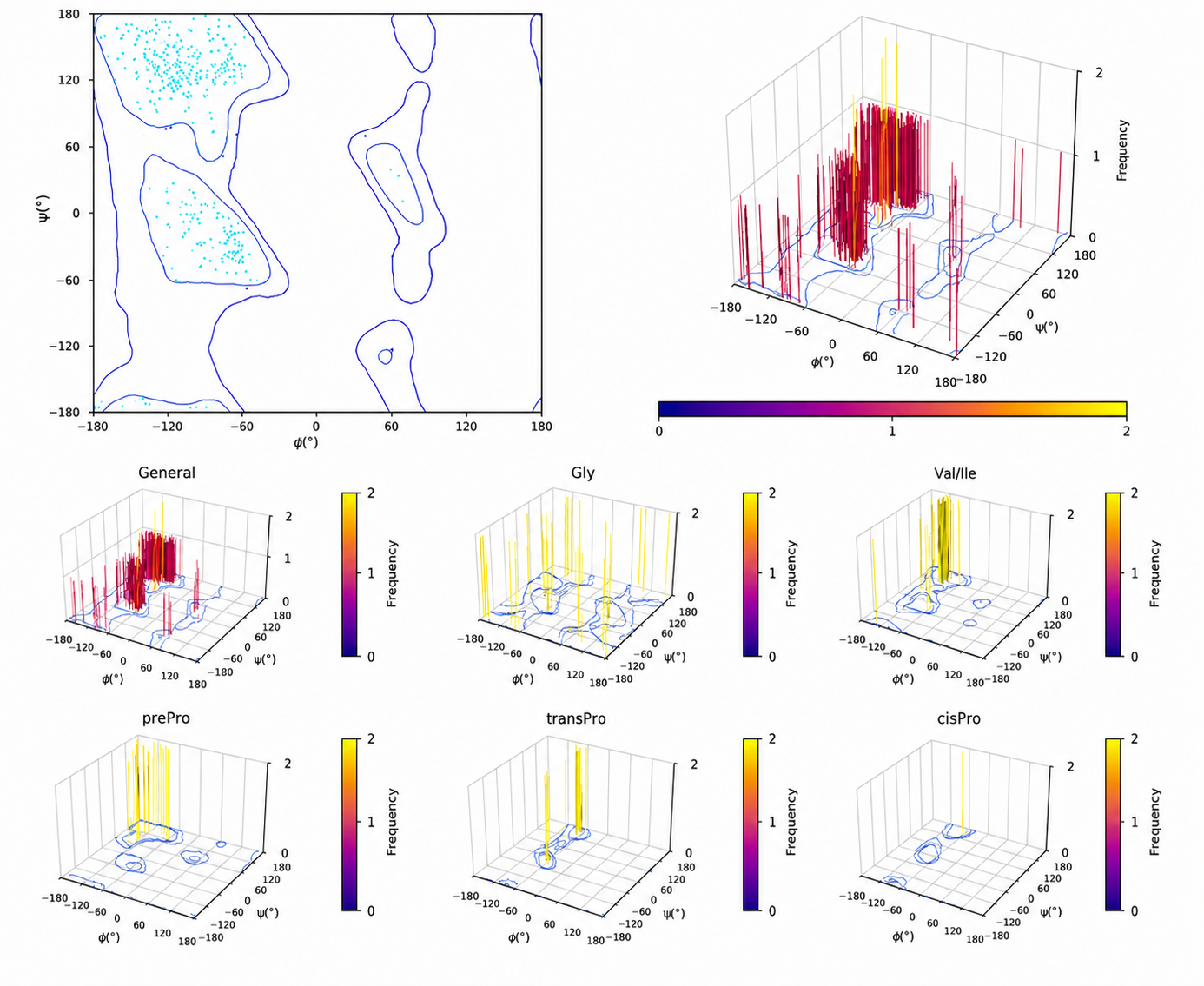
Malaria is still a major health problem in Indonesia, especially caused by Plasmodium falciparum, so it is necessary to develop new drug candidates to overcome potential antimalarial resistance. This study aims to identify the potential of reported compounds from ToGaku oil-producing plants on Timor Island as candidate inhibitors of the Plasmepsin X protein using an in-silico approach. The structure of Plasmepsin X protein (PDB ID: 7TBC) was obtained from the Protein Data Bank and prepared using YASARA Structure software. Evaluation of structural quality was performed using Ramachandran plot analysis, while active-site prediction was performed using the COACH server. Molecular docking was performed on various candidate compounds using YASARA Structure, with artemisinin as a positive control. Docking results showed that oleanane and dammarane had the highest positive binding energies, (-11,879) kcal/mol and (-8,930) kcal/mol, respectively, which were higher than the positive control, artemisinin (8,428 kcal/mol), indicating stronger binding affinity and a more stable complex. Complex interactions were dominated by hydrophobic residues, including PHE311, ILE316, ILE354, PHE355, ILE358, and PHE360, as well as by polar residues, such as SER246, GLN247, SER269, and THR460, which contributed to complex stabilization. The interaction visualization showed that the selected ligands bind to the protein’s active pocket in a stable orientation. Based on these results, triterpenoid compounds, especially oleanane and dammarane, are potential candidates for Plasmepsin X inhibitors and warrant further experimental testing.
Downloads
References
World Health Organization (WHO), “Indonesia country profile,” 2024.
Manistry of Health of the Republic of Indonesia, “National Action Plan for Acceleration of Malaria Elimination 2020-2026 (Revision),” 2023.
P. B. S. Asih et al., “Efficacy and safety of dihydroartemisinin–piperaquine for the treatment of uncomplicated Plasmodium falciparum and Plasmodium vivax malaria in Papua and Sumatra, Indonesia,” Malar. J., vol. 21, no. 1, hal. 95, 2022, doi: https://doi.org/10.1186/s12936-022-04101-0.
F. V. Rahmasari et al., “Drug resistance of Plasmodium falciparum and Plasmodium vivax isolates in Indonesia,” Malar. J., vol. 21, no. 1, hal. 354, 2022, doi: doi: 10.1186/s12936-022-04385-2.
S. Kumar, T. R. Bhardwaj, D. N. Prasad, dan R. K. Singh, “Drug targets for resistant malaria: Historic to future perspectives,” Biomed. Pharmacother., vol. 104, hal. 8–27, 2018, doi: https://doi.org/10.1016/j.biopha.2018.05.009.
G. de J. G. Ribeiro, S. L. Rei Yan, G. Palmisano, dan C. Wrenger, “Plant extracts as a source of natural products with potential antimalarial effects: An update from 2018 to 2022,” Pharmaceutics, vol. 15, no. 6, hal. 1638, 2023, doi: https://doi.org/10.3390/pharmaceutics15061638.
M. F. Heikal et al., “In silico screening and molecular dynamics simulation of potential anti-malarial agents from Zingiberaceae as potential Plasmodium falciparum lactate dehydrogenase (PfLDH) enzyme inhibitors,” Trop. Life Sci. Res., vol. 34, no. 2, hal. 1, 2023, doi: 10.21315/tlsr2023.34.2.1.
R. Handayani, T. A. Yuniarta, S. Sukardiman, dan A. Asnawi, “Search for Lead Compounds and In Vitro Assay of Potential Inhibitors of Plasmodium falciparum Prolyl-tRNA Synthetase from Natural Compound Database,” Res. J. Pharm. Technol., vol. 18, no. 2, hal. 529–536, 2025, doi: 10.52711/0974-360x.2025.00079.
G. A. Made Ratih et al., “Phytochemicals of gandarusa (Justicia gendarussa) and its preparations,” Nat. Prod. Commun., vol. 14, no. 6, hal. 1934578X19851406, 2019, doi: https://doi.org/10.1177/1934578X19851406.
M. G. Sharaf El-Din et al., “Comprehensive metabolome classification of four onion (Allium cepa) cultivars via GC–MS and UPLC-MS: Insights into chemical diversity and remote antimicrobial activity against foodborne pathogens,” Food Res. Int., vol. 221, 2025, doi: https://doi.org/10.1016/j.foodres.2025.117367.
R. Ghali et al., “LC-MS profiling and antioxidant, antifungal, and anticancer potentials of Tunisian Allium sativum L. extracts,” PLoS One, vol. 20, no. 6, hal. e0325227, 2025, doi: https://doi.org/10.1371/journal.pone.0325227.
R. Kumar et al., “From an invasive weed to an insecticidal agent: Exploring the potential of Lantana camara in insect management strategies—A review,” Int. J. Mol. Sci., vol. 25, no. 23, hal. 12788, 2024, doi: https://doi.org/10.3390/ijms252312788.
S. Gharby dan Z. Charrouf, “Argan oil: chemical composition, extraction process, and quality control,” Front. Nutr., vol. 8, hal. 804587, 2022, doi: https://doi.org/10.3389/fnut.2021.804587.
I. O. Evbuomwan et al., “In silico modeling revealed phytomolecules derived from Cymbopogon citratus (DC.) leaf extract as promising candidates for malaria therapy,” J. Biomol. Struct. Dyn., vol. 42, no. 1, hal. 101–118, 2024, doi: https://doi.org/10.1080/07391102.2023.2192799.
I. Akinwumi, A. Faleti, A. Owojuyigbe, F. Raji, dan M. Alaka, “In silico studies of bioactive compounds selected from four african plants with inhibitory activity against plasmodium falciparum dihydrofolate reductase-thymidylate synthase (pfDHFR-TS),” J. Adv. Pharm. Res., vol. 6, no. 3, hal. 107–122, 2022, doi: 10.21608/aprh.2022.139794.1175.
A. N. Hodder et al., “Basis for drug selectivity of plasmepsin IX and X inhibition in Plasmodium falciparum and vivax,” Structure, vol. 30, no. 7, hal. 947–961, 2022, doi: https://doi.org/10.1016/j.str.2022.03.018.
A. Er, S. Celik, A. E. Ozel, dan S. Akyuz, “Computational Insights Into the Mechanism of Action of Bleomycin as Anticancer and Antibacterial Agent‐Via Molecular Docking and Molecular Dynamics,” Int. J. Quantum Chem., vol. 125, no. 11, hal. e70064, 2025, doi: https://doi.org/10.1002/qua.70064Digital Object Identifier (DOI).
G. M. Gholam, D. Andrianto, Y. Adalina, dan I. M. Artika, “In Silico Computational Prediction of Royal Jelly Compounds as Potential Bcl-2, HER-2, and EGFR Inhibitors in Breast Cancer,” 2026, doi: https://doi.org/10.33263/BRIAC161.004.
F. D. A. Azis, V. Shofia, L. Latifah, dan H. Purnomo, “Molecular Docking of Kaempferol, Quercetin, and Vitamin C from Shallot Bulb as Antioxidant Agents Targeting Peroxiredoxin 5 For The Protection of Mitochondrial DNA Against Oxidative Stress,” Med. Sains J. Ilm. Kefarmasian, vol. 11, no. 1, hal. 51–58, 2026, doi: https://doi.org/10.37874/ms.v11i1.1836.
G. M. Gholam et al., “In silico computational prediction of Saussurea pulchella compounds with inhibitory effects on plasmepsin X in Plasmodium falciparum,” Informatics Med. Unlocked, vol. 49, no. June, hal. 101549, 2024, doi: 10.1016/j.imu.2024.101549.
R. Harris, A. J. Olson, dan D. S. Goodsell, “Automated prediction of ligand‐binding sites in proteins,” Proteins Struct. Funct. Bioinforma., vol. 70, no. 4, hal. 1506–1517, 2008, doi: https://doi.org/10.1002/prot.21645Digital Object Identifier (DOI).
Y. Gilad dan H. Senderowitz, “Docking studies on DNA intercalators,” J. Chem. Inf. Model., vol. 54, no. 1, hal. 96–107, 2014, doi: https://doi.org/10.1021/ci400352t.
J. M. J. Najoan, R. J. Rumampuk, V. I. Paat, dan A. A. Aloanis, “In Silico Study of the YAKRCFR Peptide Structure and Its Interaction with Human Peroxiredoxin-5,” J. Beta Kim., vol. 5, no. 2, hal. 1–8, 2025, doi: https://doi.org/10.35508/jbk.v5i2.22710.
Copyright (c) 2026 Erwince Fallo, Patrisius Maryanto Bria

This work is licensed under a Creative Commons Attribution-ShareAlike 4.0 International License.
 This work is licensed under a Creative Commons Attribution-ShareAlike 4.0 International License. Copyright is retained by the authors, and articles can be freely used and distributed by others.